A well-lit home has a means of changing exactly how a property feels long before anybody reaches the front door. The right exterior lighting can hone architectural lines, soften dark edges, and make a home appearance cared for without promoting the components themselves. That is why extra homeowners are looking beyond short-term strands and seasonal setups and buying Permanent LED Lights Installment that functions every night of the year.
What draws lots of people in is not the vacation angle, a minimum of not at first. It is the pledge of control, consistency, and restriction. You can have a home that shines delicately on a normal Tuesday in February, moves to a welcoming pattern for a backyard dinner in June, and transforms joyful in December without climbing up a ladder when. When the system is designed well, it does not shout for focus. It just makes the house look better.
That difference matters. There is a large difference between lights that embellishes and lights that boosts. Permanent systems can do both, however the best tasks start with the 2nd goal.
Why refined lighting is tougher than it looks
The expression "subtle outside lighting" sounds simple until you try to achieve it. Most home owners have seen the opposite done badly: severe determines under every eave, dissimilar colors, hotspots over garage doors, and sufficient brightness to make a home look squashed as opposed to dimensional. Exterior lighting is easy to overdo because LEDs are effective, compact, and brilliant. Also bright, in several cases.
The most effective installations often tend to borrow from landscape lights principles. Rather than asking, "How much light can we include?" The far better concern is, "What should the eye notification night?" On a craftsman-style residence, that might be the roofline and entry columns. On a modern-day home, it could be the tidy geometry along the fascia and soffits. On a brick colonial, the target is commonly a warm border that protects the home's balance instead of transforming each architectural element into its very own little spotlight.
This is where Permanent Holiday Lights have actually developed in a helpful method. Early systems commonly leaned heavily right into color-changing novelty. Newer, far better systems can absolutely do computer animated vacation scenes, however they also offer polished white tones, lowering control, zoning, and organizing that make them sensible as everyday architectural illumination. For numerous homes, the most-used setting is not red and environment-friendly in December. It is a low-output, cozy white setting at 20 to 40 percent illumination for the various other eleven months.
I have actually seen property owners think twice since they imagine an irreversible system as aesthetically evident in daylight. That worry stands, and it must be addressed prior to anything is set up. The most effective setups go away. Track color should very closely match the soffit or fascia. Cable runs need to be hidden. Fixture spacing need to follow the roofline cleanly rather than requiring uncomfortable spaces. If you can stand at the visual at noontime and hardly see the system, that is usually a good sign.
The case for irreversible over temporary
Anyone that has mounted standard holiday lights more than two times knows the regular. Disentangling cords in the garage. Changing dead bulbs. Fighting clips that snap in the cold. Looking at a high roofline while acting the ladder angle is secure enough. After that doing the entire thing once again in reverse a couple of weeks later.
Permanent systems fix that apparent frustration, however benefit is just one component of the story. The larger advantage is dependability combined with layout versatility. When the lights are installed and set, the house gains a lights layer that can be utilized for vacations, events, game days, parties, safety, and day-to-day visual allure. That means one investment serves numerous objectives rather than resting idle most of the year.
There is also a cost conversation worth having truthfully. A Long-term LED Lighting Setup is not cheap compared with purchasing a couple of boxes of short-lived lights at a big-box shop. Depending upon the size of your home, roof intricacy, control system, availability, and whether the task consists of garage lines, tops, gables, and rear elevations, pricing can vary from a couple of thousand dollars into the low 5 figures. That claimed, lots of home owners ignore what they already spend over time on substitute strings, clips, storage space tubs, extension cords, timers, and periodic labor. A lot more significantly, they often tend to neglect the price of time and threat. A high second-story roofing is not the area to save money with a DIY compromise.
When individuals claim irreversible illumination "spends for itself," I typically press back on the phrase. Not every exterior upgrade requires a strict economic return. This set is frequently a lot more regarding lowering hassle, improving appearance, and obtaining consistent use from a system that adjusts to the household. If you are the sort of homeowner that values an orderly outside and utilizes outdoor rooms typically, the return often tends to feel evident also if it never ever fits neatly into a spreadsheet.
Warm light often wins
Color-changing ability gets the advertising attention, however Classic Warm Soft Lighting are what make a permanent system feel sophisticated. On many homes, especially those with rock, block, wood accents, or warmer paint shades, a soft white in the 2200K to 3000K array looks richer and much more inviting than a great white. It flatters appearance. It produces deepness. It makes entrances feel lived in as opposed to showroom-bright.
Cooler whites can service some modern homes with crisp coatings, yet also after that, excessive blue in the color temperature can make the exterior feel sterile. Cozy light tends to age better cosmetically. It additionally mixes more normally with indoor light spilling via home windows, veranda sconces, and landscape lighting.
Brightness issues just as high as color temperature level. I commonly inform homeowners that if they can plainly see every diode from the road, the system is probably too bright for day-to-day usage. Irreversible illumination needs to commonly be dimmed for regular evening operation. Conserve the complete intensity for events or when you desire an extra noticeable effect.
An installer with good judgment will certainly not simply ask what shades you like. They will ask how you live. Do you entertain outdoors? Do you want your home to feel welcoming from the driveway yet not control the block? Is your neighborhood dark and silent, or brightly lit with great deals of seasonal display screens? Those responses shape the appropriate settings even more than a sales brochure filled with color options.
Where the system ought to go, and where it needs to not
Roofline lights is the obvious starting factor, but not every side of a home needs illumination. Actually, over-lighting is one of the most convenient ways to make a premium system look cheap. The objective is to produce intentional lines, not trace every feasible perimeter.
Front altitudes usually are worthy of the most interest because that is where the home's identification rests. Main rooflines, front-facing gables, porch areas, and garage describes are common prospects. Rear elevations rely on how the backyard is utilized. If there is a patio area, swimming pool location, or outside kitchen area, including zones to the back of the house can make good sense. If the back is mostly hidden and rarely made use of after dark, the return might be limited.
Eaves and soffits are prominent mounting locations due to the fact that they hide fixtures well and develop a descending clean or controlled factor result depending on the item. Fascia installments can function as well, however the details issue. You desire sightlines, spacing, and accessory techniques that look calculated in daytime and tidy at night.
Some rooflines deal with the principle. Very luxuriant trim, greatly disturbed lines, or surfaces with inadequate placing gain access to can produce unpleasant changes. Tall tops might require specialized lifts or include labor that changes the economics of the task. Historical homes also should have additional care. A permanent system can match an older home wonderfully, however just if the installment appreciates the design and does not leave noticeable plastic tracks where they do not belong.
The innovation behind a polished result
Not all irreversible systems are developed the exact same. The noticeable effect relies on several technological selections that property owners hardly ever see in advertisements.
LED density and spacing identify whether the light reads as a populated pattern or a more unified architectural line. Closer spacing provides even more control and typically a cleaner look, yet it can elevate price. Lens style affects spread and glare. Private addressability issues if you desire animated scenes or specific color areas. Lowering top quality matters if you appreciate warm, underrated nighttime usage. App layout matters because an effective system comes to be bothersome quick if configuring it feels like running industrial equipment.
Power delivery likewise deserves interest. Longer runs, larger homes, and complex rooflines may need wise preparing around voltage decrease, control positioning, and shot points. This is one factor professional setup matters. A system that looks penalty on day one yet creates irregular brightness, color drift, or undependable sectors later was not really "fine" in any way. It was under-engineered.
Weather resistance is one more area where the details matter. Exterior-rated parts ought to be typical, yet scores alone do not ensure a sturdy install. I take notice of just how connectors are protected, how penetrations are secured, exactly how low-voltage lines are routed, and whether the mounting surface area can take care of seasonal expansion and contraction. Freeze-thaw cycles, wind, straight sun, and driving rainfall reveal weak handiwork quickly.
What a great installation process really looks like
A polished outcome begins prior to anybody opens a ladder. The installer should examine the home from numerous angles, not simply stand in the driveway and offer a rough guess. They must take a look at roof covering height, gain access to, fascia condition, offered power, existing outside illumination, and areas where the system can conceal naturally.
Good companies normally simulated up portions of the roofline electronically or at the very least talk via likely zones and utilize cases in sensible terms. That matters due to the fact that home owners frequently believe they desire maximum coverage up until they see just how much cleaner a selective layout can look. More lights is not automatically better lighting.
On setup day, cleanliness counts. Tracks or channels ought to run directly and true. Corners must be managed with care rather than forced. Control boxes need to be positioned where they are protected and serviceable. Wire monitoring must not look like an afterthought. If the crew leaves a house with perfect nighttime pictures but untidy daytime details, the job was just half done.
Programming is the various other fifty percent of the handoff. A permanent system is only valuable if the house owner can in fact utilize it. I such as to see a few prefabricated scenes set up prior to the staff leaves: a daily cozy white, a weekend break entertaining setting, a vacation pre-programmed, and probably a reduced late-night setting. If the application is filled with loads of confusing results yet none of the useful day-to-day scenes are created, the system frequently goes underused.
Questions worth asking before you employ anyone
The simplest means to find a weak installer is to ask functional questions and pay attention for vague answers. You do not require to become a lighting engineer, but you do require to comprehend how the company thinks.
- How visible will the track and wiring be during the day? What cozy white variety does the system deal, and just how well does it dim? How are long runs powered to stay clear of irregular brightness? What does the guarantee cover, labor consisted of or parts only? Can the system be serviced or increased later without changing everything?
The responses need to sound specific, not rehearsed. A solid installer can clarify compromises plainly. They must be comfortable talking about look in daytime, not simply application functions and holiday animations.
Matching the lighting style to the house
One of one of the most typical errors in outside lights is picking results that compete with the home's design. A home with typical lines, shutters, and mature landscape design hardly ever gain from aggressive activity patterns or extremely saturated color as a day-to-day setting. It generally looks far better with gentle, cozy border illumination. A minimal modern home may carry a cleaner white line or selective accent color much more comfortably, yet also there, small amounts has a tendency to age better.
Neighborhood context matters as well. In some locations, vibrant vacation screens become part of the regional society, and a programmable roofline fits right in. In quieter neighborhoods, a polished look has more staying power. The very best permanent systems let house owners take part in the joyful side when they wish to, after that return your home to something composed and sophisticated the remainder of the year.
I bear in mind one homeowner that originally desired every roof covering edge, dormer, and rear line lit because he had actually seen an on the internet video clip full of remarkable effects. After a brief mockup, he altered direction totally. We concentrated on the primary front roofline, the deck return, and the garage framework. After that we set a day-to-day scene with cozy white at low outcome. The result made the home look extra costly, not much more enhanced. A month later on he claimed the shock was how usually they utilized the lights outside the vacations. His family liked pulling right into a softly lit house every evening. That type of comment turns up often.
Maintenance is light, not nonexistent
One selling factor of Long-term Holiday Lighting is lowered upkeep, and that is mainly true. However "long-term" does not mean "never ever requires interest." Exterior systems stay in severe problems. Elements age. Apps update. Trees become sightlines. Gutter work or roof covering replacement may need short-term coordination.
The great information is that regular upkeep is usually minor if the original installation was solid. A lot of homeowners mostly require to check that schedules still straighten with seasonal sundown changes, validate the app stays linked after network updates, and occasionally clean visible dust or particles from obtainable elements if build-up influences appearance.
A couple of practical habits aid extend the life of the system:
- Keep tree branches from massaging against tracks or wiring. Test key scenes a couple of weeks before major holidays. Notify roofers, painters, and rain gutter teams that lights is installed. Save app qualifications and scene setups someplace secure. Ask the installer just how solution telephone calls are managed prior to you require one.
That is about as requiring as it obtains for most homes. Compared with the annual routine of hanging and eliminating short-lived strands, the distinction is significant.
Energy usage and running costs
Homeowners often presume a large long-term lights system should take in a visible amount of power every evening. In technique, LED effectiveness keeps expenses fairly modest, especially when the system is run at lower illumination for regular use. Real energy usage relies on the number of nodes, brightness degree, shade option, control layout, and nighttime timetable, yet lots of homes can operate an everyday cozy white scene for much less than people expect.
Colorful computer animated scenes, full illumination vacation display screens, and all-night procedure will certainly increase usage, certainly. So will certainly covering every altitude of a big home. Still, modern-day LED systems remain far more efficient than older incandescent holiday lighting. The bigger cost motorist is generally installation, not regular monthly electricity.

This is another factor refined illumination is so appealing. A https://permanentlocationrating597.huicopper.com/exactly-how-long-term-vacation-lighting-simplify-decorating-while-enhancing-home-worth controlled, warm, dimmed setup not only looks better on the majority of houses, it normally utilizes less power too. Great layout and efficiency usually direct in the same direction.
When long-term illumination is not the appropriate move
For all their benefits, permanent systems are not universally best. If a home owner enjoys transforming décor styles every period and delights in the ritual of installing specialty decoration by hand, irreversible roofline lights might not change that experience. If your home schedules for major exterior remodellings, roof substitute, or fascia repair in the future, it may be smarter to wait and incorporate the illumination later. If the home's style supplies few tidy placing chances and the installer can not hide the system properly, the daytime look might not warrant the investment.
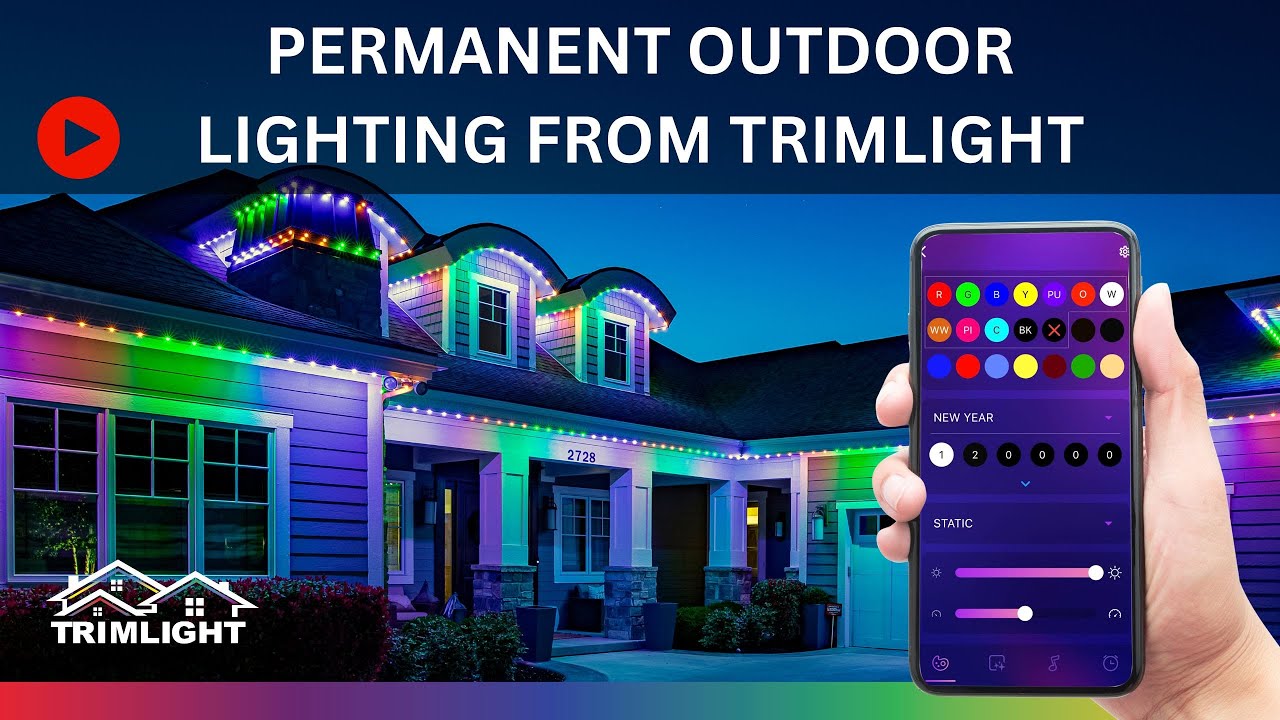

Budget is one more honest limiter. If the option is in between a well-done partial setup and a stretched, endangered full-house arrangement, I would certainly generally pick the partial. Start with the front elevation where the visual effect is toughest. Broaden later on if the system allows. A restrained initial stage usually looks far better than a sprawling job that surpasses the budget and cuts corners on item high quality or workmanship.
The ideal results feel inevitable
That may seem like a weird requirement for lights, but it is the one I come back to. When a Long-term LED Lights Installment is done remarkably well, it really feels as though your house was constantly meant to look by doing this after dark. The components vanish. The brightness feels measured. The warm tone flatters materials instead of whitening them. Vacation scenes come to be an option, not the entire identity of the system.
That is why refined, stunning lighting has actually come to be the standard. Property owners are not just acquiring lights. They are getting control over state of mind, visibility, and aesthetic charm, night after evening, season after period. The greatest tasks respect the style, make up every day life, and prioritize Timeless Warm Soft Lights as much as cheery shade. They make a home look more welcoming on an ordinary night, which is where most of life in fact happens.
If that is the goal, permanent lighting can be one of the most rewarding exterior upgrades a property owner makes. Not due to the fact that it is showy, however due to the fact that it quietly improves the way the home is seen and really felt, every time the sunlight goes down.